
A Simple Kanban Workflow for Small Teams
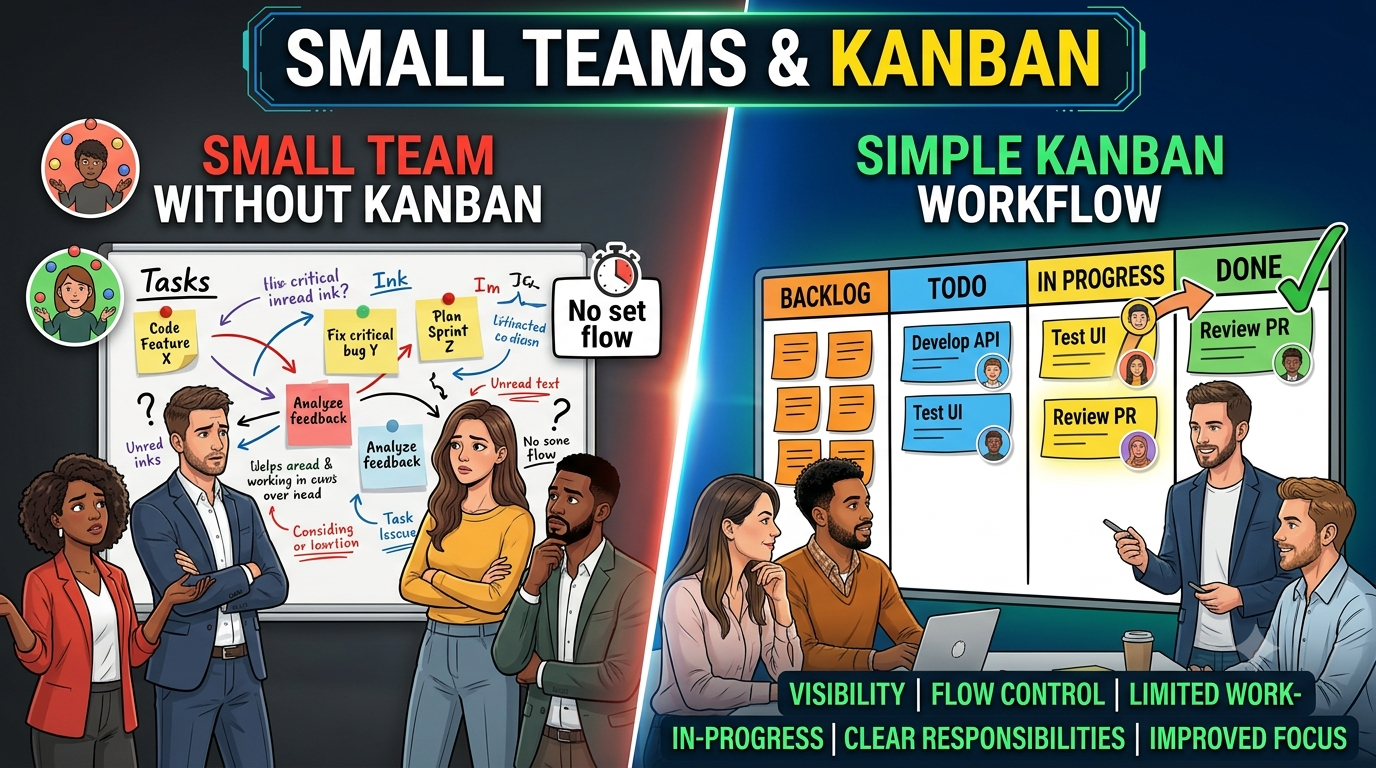
When a small team starts handling more projects, it’s easy for work to become difficult to track.
People know what they are working on, but it can still be unclear:
What needs to be done next?
Who owns each task?
What is currently blocked?
Which tasks are getting delayed?
A simple Kanban workflow can solve a lot of this without adding unnecessary process.
Start with a few clear stages
A basic board can be as simple as:
TODO → IN PROGRESS → DONE
You can add another stage such as Blocked if your team regularly has work waiting on something else.
The goal isn't to create as many columns as possible. The goal is to make the current state of work obvious.
Give every task an owner
One useful rule for small teams is to have one clearly responsible person for each task.
Other team members can still contribute, review, or collaborate, but there should be someone accountable for moving the task forward.
This makes follow-ups much easier.
Add due dates where they matter
Not every task needs a deadline.
For tasks that affect releases, customers, or other team members, however, a due date makes priorities clearer and makes delays easier to spot.
Keep the board updated
A Kanban board only helps if it reflects reality.
If a task is already being worked on, move it to In Progress. If it's finished, move it to Done.
This sounds obvious, but keeping the board accurate is often more valuable than adding more project-management features.
Keep reporting simple
For a small team, you don't necessarily need complicated project reports.
A few useful questions are often enough:
How much work are we completing?
What is overdue?
What is currently blocked?
What should we work on next?
Tools such as Otper are built around this kind of Kanban workflow, combining task ownership, deadlines, boards, and delivery reporting in one place.
But the important part isn't the tool. It's having a workflow that makes ownership and progress visible.
Start simple, keep the board current, and add more process only when your team actually needs it.